Cross-Listing to eBay and Depop: The Complete Multi-Platform Strategy

Learn how to cross-list from Poshmark to eBay and Depop. Inventory sync, pricing strategies, and tools for multi-platform selling.

Quick Answer

Cross-list your Poshmark inventory to eBay and Depop to reach 40-60% more buyers. Use a tool like List Perfectly or Vendoo ($20-50/month) to push listings in under a minute and auto-delist when something sells. Price higher on Poshmark (room to negotiate), lower on Depop (buyers expect deals).

A vintage Polo denim jacket sat in my Poshmark closet for six weeks at $65. I cross-listed it to eBay on a Thursday afternoon. It sold by Saturday. That pattern repeated often enough that I stopped asking "which platform should I list on?" and started listing on all three.

Sellers who cross-list across Poshmark, eBay, and Depop consistently pull in 40-60% more revenue than single-platform sellers. The math is straightforward — more eyeballs, more sales. The problem is that three platforms sounds like three times the work. And without a system, it is.

There is a catch. Cross-listing without a real system behind it leads to double-sells, pricing mismatches, and three times the customer service headaches. Below is the full playbook for doing it right, from platform-by-platform fee comparisons to the inventory sync workflows that prevent 2 AM cancellation emails.

What Are the Fees for Poshmark, eBay, and Depop?

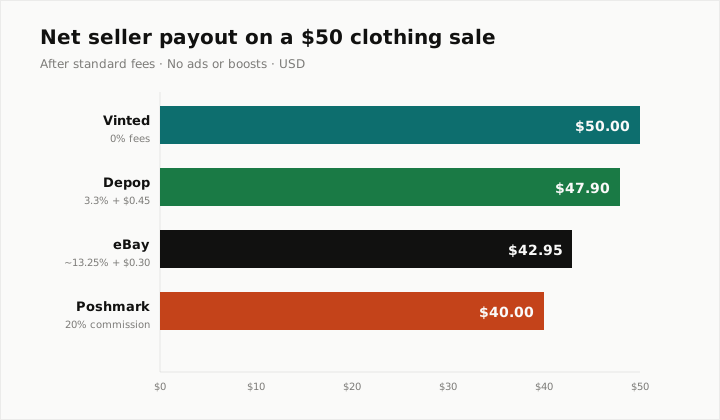
Poshmark charges a flat 20% on all sales over $15. eBay charges 13.25% for most clothing categories (with a $0.30 insertion fee waived on the first 250 listings per month). Depop dropped its selling commission in 2024 — sellers now pay approximately 3.3% + $0.45 in payment processing only. On a $60 sale, Poshmark nets you $48, eBay nets you ~$51.65, and Depop nets you ~$57.55.

Poshmark charges 20%, eBay charges 13-15%, and Depop charges 13% in total fees. Before you start copying listings everywhere, get familiar with what makes each platform tick. The fee differences alone can shift your profit margins by 10% or more.

Fee Structures

Poshmark takes a flat 20% commission on sales over $15 (and $2.95 for sales under $15). Easy to calculate, but it's the highest of the three.

eBay's fees land around 13-15% total when you combine the final value fee (12.9% for most categories) with payment processing (about 2.9% + $0.30). Insertion fees kick in if you list more than 250 items per month, though most sellers won't hit that limit.

Depop charges 10% plus payment processing of around 3.3%, making the effective rate around 13%. Lower fees don't always mean higher profits though—Depop buyers often expect lower prices on vintage items.

Quick Fee Math

On a $50 sale: Poshmark keeps $10. eBay keeps roughly $7.50. Depop keeps about $6.50. That $3.50 difference adds up when you're moving 100+ items per month.

Take-Home by Platformafter all seller fees · per sale price$25$50$75$100$25$22.50$20.00$21.39$50$45.00$40.00$43.08$75$67.50$60.00$64.76$100$90.00$80.00$86.45MercariPoshmarkeBayMercari's flat 10% fee yields the highest take-home at all price points
Take-home comparison across Poshmark, eBay, and Depop at different price points
Profit Calculator

Calculate your reselling profit

$
$
$
Enter a sale price to see your profit breakdown
Compare your take-home across platforms — enter your numbers to see the fee difference

Buyer Demographics and Behavior

Poshmark buyers are mostly women (over 70%) browsing on their phones, often late at night. They expect to negotiate through offers and appreciate styled photos. The social features matter here: likes, follows, shares.

eBay buyers tend to be older and include more men. They're comparison shoppers who check completed listings before buying. They want detailed specifications and filter by exact sizes, brands, or conditions. Less chatty, more transactional.

Depop attracts bargain hunters who want quick purchases at fair prices. It feels more casual than eBay, less social than Poshmark. Reasonable prices and fast shipping win here.

Shipping Differences

Poshmark provides prepaid labels starting at $7.67 (Priority Mail). Items under 5 lbs don't need weighing. Slap on the label, ship it. Convenient, but pricey for lighter items.

eBay gives you more options. You can offer free shipping (built into your price), calculated shipping based on buyer location, or flat-rate options. Most resellers use USPS First Class for items under 1 lb and Priority Mail for heavier packages. Takes more setup, but you can save real money on lightweight items.

Depop offers prepaid labels like Poshmark with more weight tiers. You can also ship on your own and input tracking manually. Their Sweet price labels often beat post office rates.

What Sells Best on Each Platform

Poshmark leads for NWT and lightly-used women's contemporary fashion (Lululemon, Free People, Anthropologie). eBay wins for collectibles, electronics, menswear, and anything benefiting from auction format or global reach. Depop dominates vintage clothing, streetwear, and Y2K fashion with a Gen Z buyer who pays a premium for unique, aesthetic pieces. Listing the same item across all three can increase sell probability by 40-60%.

Different items perform differently across platforms. Knowing each platform's strengths helps you decide where to list first, or whether certain items are even worth listing somewhere.

Poshmark Strengths

  • Women's contemporary and designer clothing (Free People, Anthropologie, Lululemon)
  • Handbags and accessories, especially mid-range designer (Coach, Kate Spade, Michael Kors)
  • Boutique and trendy items that photograph well
  • Athleisure and activewear
  • Premium denim (AG, Citizens of Humanity, Mother)

Poshmark struggles with men's clothing (smaller buyer base), vintage items (those buyers shop eBay or Etsy), and anything requiring detailed measurements or specifications.

eBay Strengths

  • Men's clothing and shoes (much larger market than Poshmark)
  • Vintage and collectible items
  • Electronics, media, and non-clothing categories
  • High-end designer items (authentication program helps)
  • Hard-to-find sizes (searchable by exact measurements)
  • Lots and bundles for wholesale buyers

eBay works for almost everything, but competition is intense. Your listing needs excellent photos and keyword-optimized titles to get noticed. Items under $15-20 often aren't worth the effort because fixed fees eat into thin margins.

Depop Strengths

  • Mid-range women's and men's clothing
  • Kids' items (strong parent community)
  • Home goods and decor
  • Video games and collectibles
  • Items priced under $30 (lower fees make these viable)

Depop is ideal for clearing inventory that's been sitting. Buyers expect deals, so price accordingly. It also works well for items that don't fit Poshmark's aesthetic but aren't worth eBay's optimization effort.

Platform × Category Fitwhich platforms suit your inventoryBestGoodNot IdealPoshmarkeBayMercariDepopEtsyWhatnotFashionElectronicsCollectiblesHome/VintageCross-list on 2-3 platforms for maximum buyer reach
Which categories perform best on each platform

Overlap Categories

Some items sell well everywhere: popular athletic brands like Nike and Adidas, trendy brands like Zara and H&M, shoes in common sizes, and jewelry. For these, cross-list to all three and let the market decide.

The Manual Cross-Listing Process

What does cross-listing actually involve when you're doing it by hand? Understanding the manual workflow helps you see what tools automate and whether you actually need them.

Step-by-Step Manual Workflow

For each item, you open your source listing (say, Poshmark), then create new listings on eBay and Depop. That means downloading or re-uploading photos, copying your description, re-entering all the item details (brand, size, color, condition), setting platform-specific pricing, and configuring shipping options.

On eBay, you'll also need to fill out item specifics: the structured data fields that help buyers find your listing. A dress might need neckline, sleeve length, occasion, pattern, and a dozen other fields. Depop has fewer required fields but still needs category selection and condition details.

Time Investment

Manually cross-listing a single item takes 5-10 minutes depending on complexity. That's about 2-3 minutes per platform after your initial Poshmark listing. If you're listing 10 new items weekly, that's an extra 1-2 hours just for cross-listing.

The bigger time drain is maintenance. Change a price on Poshmark? Update it on eBay and Depop. Something sells? Delete it everywhere else. Add new photos? Upload to all platforms. This ongoing work is where most sellers give up on multi-platform selling.

The Real Cost

Manual cross-listing doesn't scale. At 100 active listings across 3 platforms, you're managing 300 listings. Any inventory change means opening 3 different apps. Most sellers hit a wall around 50-75 items before the maintenance becomes unworkable.

Cross-Listing Tools and Automation

Cross-listing tools exist to solve exactly these problems. They pull your listing data from one platform and push it to others, translating between different field formats automatically.

How Cross-Listing Tools Work

Most tools work through browser extensions or web apps that connect to your selling accounts via API or browser automation. You select a source listing, choose destination platforms, review the mapped data, and hit publish. The tool handles photo uploads, field mapping, and category selection.

Good tools let you edit the listing for each platform before publishing. This matters because a title that works on Poshmark (brand-forward, trendy language) often needs reworking for eBay (keyword-rich, specification-heavy).

Key Features to Look For

  • One-click cross-posting from any supported platform to others
  • Bulk listing capability for existing inventory
  • Photo optimization (watermarks, resizing for platform requirements)
  • Category mapping between platforms
  • Price adjustment by platform (add 5% for eBay, subtract 10% for Depop)
  • Description templates with platform-specific formatting

List Perfectly is one of the most established options, supporting Poshmark, eBay, Depop, and several other platforms. Vendoo offers similar functionality with stronger analytics. Crosslist is a newer option with competitive pricing. Each has different pricing tiers based on listing volume.

Expect to pay $19-49 per month for serious selling, with some tools offering per-listing pricing that works better for smaller closets. Most offer free trials so you can test the workflow before committing.

Inventory Synchronization: Solving the Double-Sell Problem

Picture this: someone buys your vintage Levi's jacket on eBay at 2 AM. You wake up and discover it also sold on Poshmark an hour later. Now you have to cancel one order, deal with an unhappy buyer, and potentially damage your seller metrics.

This is the double-sell problem, and it's the biggest risk of multi-platform selling. Inventory sync prevents it.

Manual Sync

The DIY approach is simple but demands discipline: when something sells, immediately open every other platform and delete or mark it sold. Turn on phone notifications for all platforms so you catch sales quickly. Some sellers dedicate the first 15 minutes of each day to syncing overnight sales.

Manual sync works at small scale (under 50 cross-listed items) if you're responsive. Risk grows with inventory size and how quickly you respond to notifications.

Automated Sync

Cross-listing tools increasingly offer inventory sync. When they detect a sale on one platform, they automatically delist or mark as sold on connected platforms. Delay varies: some tools sync within minutes, others check hourly.

Sync Speed Matters

A tool that syncs every 15 minutes works fine for slow-moving inventory. But if you're selling popular items during peak hours, look for near-real-time sync (under 5 minutes) to reduce double-sell risk.

Three-Way Sync Challenges

True three-way sync between Poshmark, eBay, and Depop is technically difficult. Each platform has different APIs (or no public API at all), different ways of tracking inventory, and different delays. No tool offers perfect instant sync across all three.

The workaround most serious sellers use: keep a master inventory spreadsheet or database, and treat the cross-listing tool as the source of truth. Make changes in the tool first, then let it push to all platforms.

Pricing Strategy Across Platforms

Should the same item cost the same everywhere? Probably not. Between fee differences, buyer expectations, and platform-specific features, smart sellers adjust pricing by marketplace.

Fee-Adjusted Pricing

Start with your target profit margin. If you want $20 profit on an item, work backward from each platform's fees to set your listing price.

To net $20 profit after a $10 cost of goods: on Poshmark (20% fees), list at $37.50. On eBay (15% fees), list at $35.30. On Depop (13% fees), list at $34.50. Same profit, different prices.

Platform-Specific Markups

Some sellers adjust further based on buyer behavior. Poshmark buyers expect to negotiate, so you might price 15-20% higher to leave room for offers. eBay buyers comparison shop aggressively, so competitive pricing wins. Depop buyers want deals, so slightly lower prices can speed up sales.

A practical formula: use your target eBay price as baseline, add 10-15% for Poshmark, subtract 5% for Depop. Adjust based on your actual sales data over time.

Bundle and Shipping Variations

Poshmark's bundle feature lets you offer discounts on multiple items with combined shipping. eBay lacks native bundling but you can create multi-item lots. Depop has bundle requests similar to Poshmark.

Think about free shipping (built into price) versus buyer-paid shipping. eBay data suggests free shipping listings get more visibility. Poshmark shipping is always prepaid by buyer unless you cover it. Depop gives you flexibility.

Listing Optimization by Platform

Copy-pasting the same listing to every platform is a mistake. Each marketplace has different search algorithms, buyer expectations, and required fields. Optimize for each.

Title Differences

Poshmark titles max out at 80 characters and should lead with brand. "Lululemon Define Jacket Size 6 Black Luon" works well. The search isn't sophisticated, so front-load the important keywords.

eBay also allows 80 characters, but keyword strategy matters more. Include size, color, condition, and key features. "Lululemon Define Jacket Womens Size 6 Black Luon Full Zip Athletic" uses more characters for better searchability.

Depop falls in between. Clarity beats keyword stuffing. "Lululemon Define Jacket - Black - Size 6" is clean and easy to scan.

Description Formatting

Poshmark descriptions can be casual and show personality. Emojis are common. Bullet points work, but so does conversational text. Mention styling ideas and how items fit.

eBay descriptions should be comprehensive and easy to scan. Use bullet points for measurements and specifications. Include condition details, flaws, and care instructions. Buyers here expect dense information.

Depop descriptions fall in the middle. Keep them brief but informative. Measurements help. Skip the marketing language.

Photo Requirements

Poshmark allows up to 16 photos and rewards styled flat lays or modeled shots. Bright backgrounds work well. Square format is native.

eBay allows 24 photos and prioritizes detail shots. Include close-ups of tags, labels, condition issues, and unique features. White backgrounds look professional and show details clearly.

Depop allows 12 photos. Quality matters but less than on Poshmark. Good lighting and clear shots are essential. Tag and brand photos build buyer confidence.

Managing Multi-Platform Sales

Selling on multiple platforms adds operational complexity. Here's how to handle the day-to-day.

Notification Management

Turn on push notifications for all selling apps. A sale notification that sits unseen for 6 hours raises your double-sell risk significantly. Some sellers keep selling apps on their home screen or use a dedicated phone for business.

Consider using different notification sounds for different apps. You can prioritize without checking your screen. The Poshmark "cha-ching" is iconic for a reason.

Shipping Workflow

Each platform has different label generation and shipping requirements. Develop a consistent workflow: check sales each morning, print all labels at once, pack items assembly-line style, drop off at a single carrier location when possible.

Standardize your packing materials. Poly mailers work for most clothing on all platforms. Priority Mail boxes are free from USPS and work for heavier items. Having supplies ready removes friction.

Customer Service Across Platforms

Buyer expectations vary. Poshmark buyers use the comment system and expect friendly, quick responses. eBay buyers are more transactional but watch response time metrics. Depop buyers fall in between.

Set aside time twice daily to respond to messages across all platforms. Slow responses hurt conversion and can affect your seller metrics on eBay.

Reviews and Feedback

Your reputation is platform-specific. A 5-star rating on Poshmark does nothing for you on eBay. Build strong ratings on each platform. It takes time but increases buyer confidence and conversion rates.

On eBay especially, respond professionally to any issues. Defects on your seller account can limit visibility and disqualify you from Top Rated Seller status.

Scaling Your Multi-Platform Business

At some point, you'll hit capacity limits. Here's how sellers scale beyond what one person can manage.

When to Add More Platforms

Master two platforms before adding a third. Getting Poshmark and eBay running smoothly takes 2-3 months of consistent selling. Add Depop (or Depop, Facebook Marketplace, or others) only when your existing platforms feel manageable.

Signs you're ready: consistent sales targets, reliable inventory sync, bandwidth for more listing work. Signs you're not ready: regularly missing shipment deadlines or dealing with sync failures.

Building Your Tool Stack

Most successful multi-platform sellers combine several tools. A cross-listing service for posting and syncing. A photo editing app for consistent image quality. A spreadsheet or inventory management system for tracking costs and sales.

Don't over-tool early. Start with the cross-lister that handles your most-used platforms well. Add specialized tools only when you hit specific bottlenecks.

Outsourcing Options

As volume grows, consider what you can hand off. Virtual assistants can handle listing creation and cross-posting. Family members or part-time employees can do shipping prep. Some sellers outsource photography entirely.

Run the numbers: if cross-listing takes 10 hours per week and you can hire help for $15/hour, that's $150/week. If those 10 hours of your time are worth more than $15/hour for sourcing or other activities, outsourcing makes sense.

Frequently Asked Questions

How much can I actually make by adding eBay and Depop to my Poshmark store?

On a $50 sale, eBay nets roughly $42.50 and Depop nets about $43.50 compared to Poshmark's $40, so the fee savings alone add a few dollars per transaction. More importantly, each platform reaches a different buyer pool, which is why sellers consistently report higher total volume rather than just cannibalization between platforms.

How many active listings do I need before cross-listing tools are worth the monthly fee?

Most sellers find the math works around 50 cross-listed items. At that point, the tool replaces roughly 4-5 hours of manual maintenance per month, which more than covers a $19-49 subscription. Below 20 items, manual sync is manageable and the fee is harder to justify.

What is the real risk of a double-sell and how common is it?

Double-sells are rare on slow-moving inventory but become a genuine problem once you're selling more than a few items per day across all platforms. The consequence is canceling one order, which on eBay can count as a defect against your seller account if it happens repeatedly. Using a sync tool that checks every 15 minutes or less keeps the risk negligible for most closet sizes.

Do I need separate eBay and Depop accounts, or can I use one account for everything?

Each platform requires its own seller account — there is no shared login. You'll manage three separate dashboards, seller ratings, and payout schedules, which is one reason most sellers use a cross-listing tool as a single control point rather than jumping between apps.

Which items should I cross-list first if I am just starting out?

Start with your 20 highest-priced items, since the additional exposure has the biggest impact on items over $50 where the fee difference between platforms also matters most. Men's clothing and vintage pieces are especially worth pushing to eBay, where the buyer base for those categories is significantly larger than on Poshmark.

How do I handle a buyer on one platform asking about an item I already sold on another?

If a sale just happened and sync hasn't caught up yet, decline the offer and immediately delist the item manually on all remaining platforms. On Poshmark, you can mark the item as sold without canceling a transaction, which keeps your metrics clean. Getting into the habit of delisting within minutes of a sale — not hours — prevents most of these situations.

cross-listingebaydepopmulti-platformreselling toolshow to sell clothes online

Ready to implement these strategies?

Let FlipSail automate the repetitive work so you can focus on what matters.

Checking your plan...Checking your plan...
Back to all articles